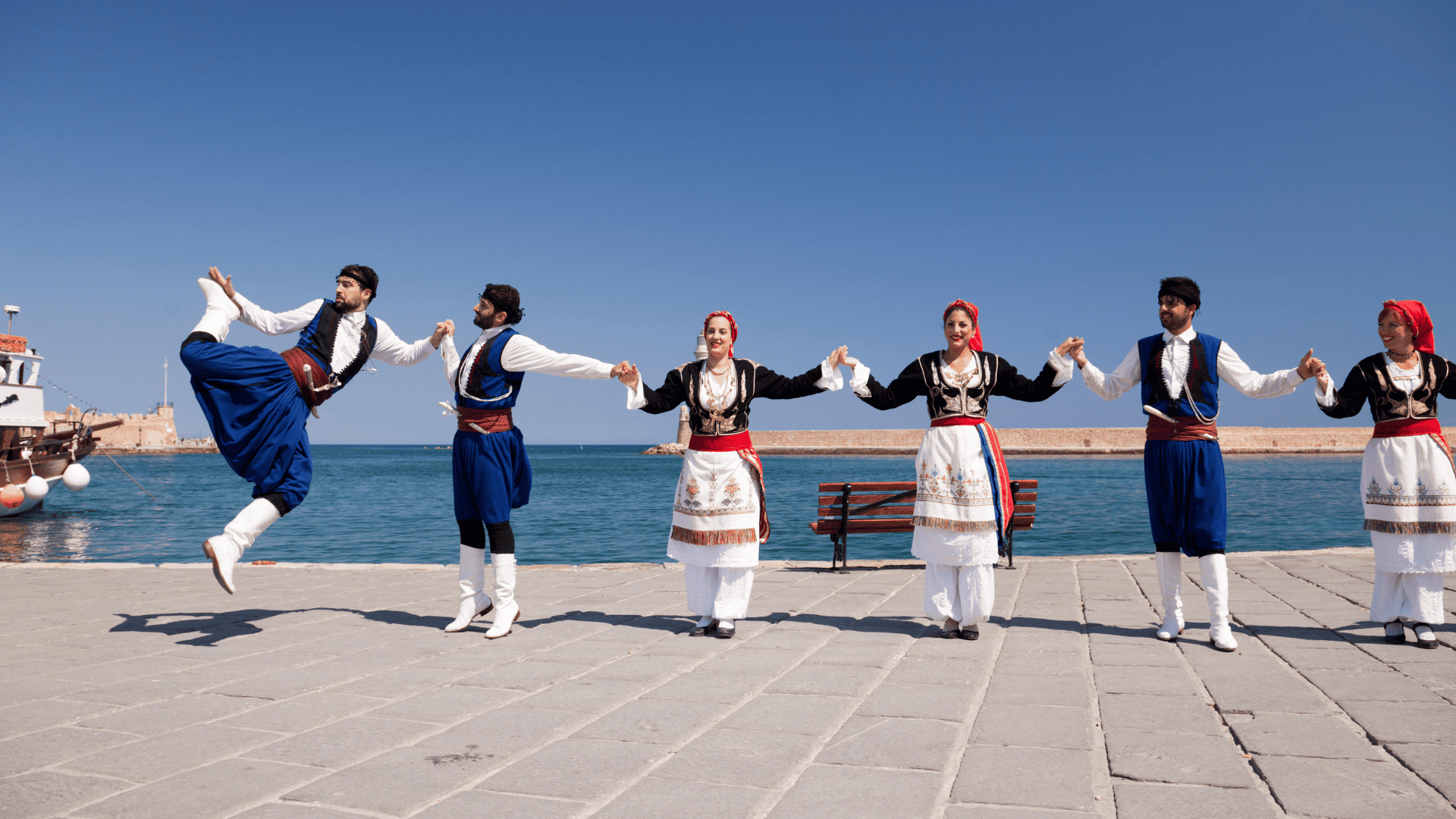
Crete is known for its rich history, warm hospitality, and strong traditions. Among the most important elements of the island’s cultural identity are its traditional dances, which have been passed down from generation to generation for centuries.
More than just a form of entertainment, Cretan dances tell stories, express emotions, and bring communities together. Even today, they remain an essential part of celebrations, festivals, and social gatherings across the island.
A Tradition Rooted in History
The origins of Cretan dance can be traced back to ancient times. Archaeological findings and historical records suggest that dance played an important role in the lives of the Minoans, one of Europe’s earliest civilizations.
Over the centuries, these traditions evolved, influenced by different cultures and historical periods. Despite these changes, dance has remained a constant expression of Cretan identity and pride.
The Most Famous Cretan Dances
Among the many traditional dances of Crete, the Pentozali is perhaps the most well-known. Energetic and dynamic, it symbolizes freedom, courage, and the fighting spirit of the Cretan people. The dance begins slowly before building into a faster rhythm, creating an exciting atmosphere for both dancers and spectators.
Another popular dance is the Siganos, which translates as “slow dance.” Performed in a circular formation, it is characterized by smooth and graceful movements, often serving as the foundation for other traditional dances.
Sousta is another beloved Cretan dance, traditionally performed by couples. Known for its rhythmic steps and lively character, it has long been associated with courtship and social celebrations.
The Music Behind the Dance
Traditional Cretan dances are accompanied by live music, usually played on instruments such as the lyra and the laouto. These instruments create the distinctive sound that has become synonymous with Cretan culture.
The close connection between music and dance is what makes these performances so special. Together, they create an atmosphere that is both joyful and deeply connected to local traditions.
Dances That Bring People Together
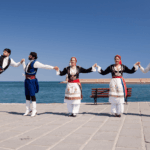
One of the most remarkable aspects of Cretan dances is their ability to bring people together. Whether at a village festival, a wedding, or a family celebration, it is common to see people of all ages joining the dance circle.
These moments strengthen community bonds and help preserve traditions that have survived for generations. For many Cretans, learning traditional dances begins at an early age and continues throughout life.
More Than a Dance
Cretan dances are more than a series of steps and movements. They reflect the history, values, and spirit of the island and its people.
Through music, rhythm, and shared celebration, these traditions continue to connect the past with the present, keeping an important part of Cretan culture alive for future generations.