The Komboloi: The Story Behind Greek Worry Beads
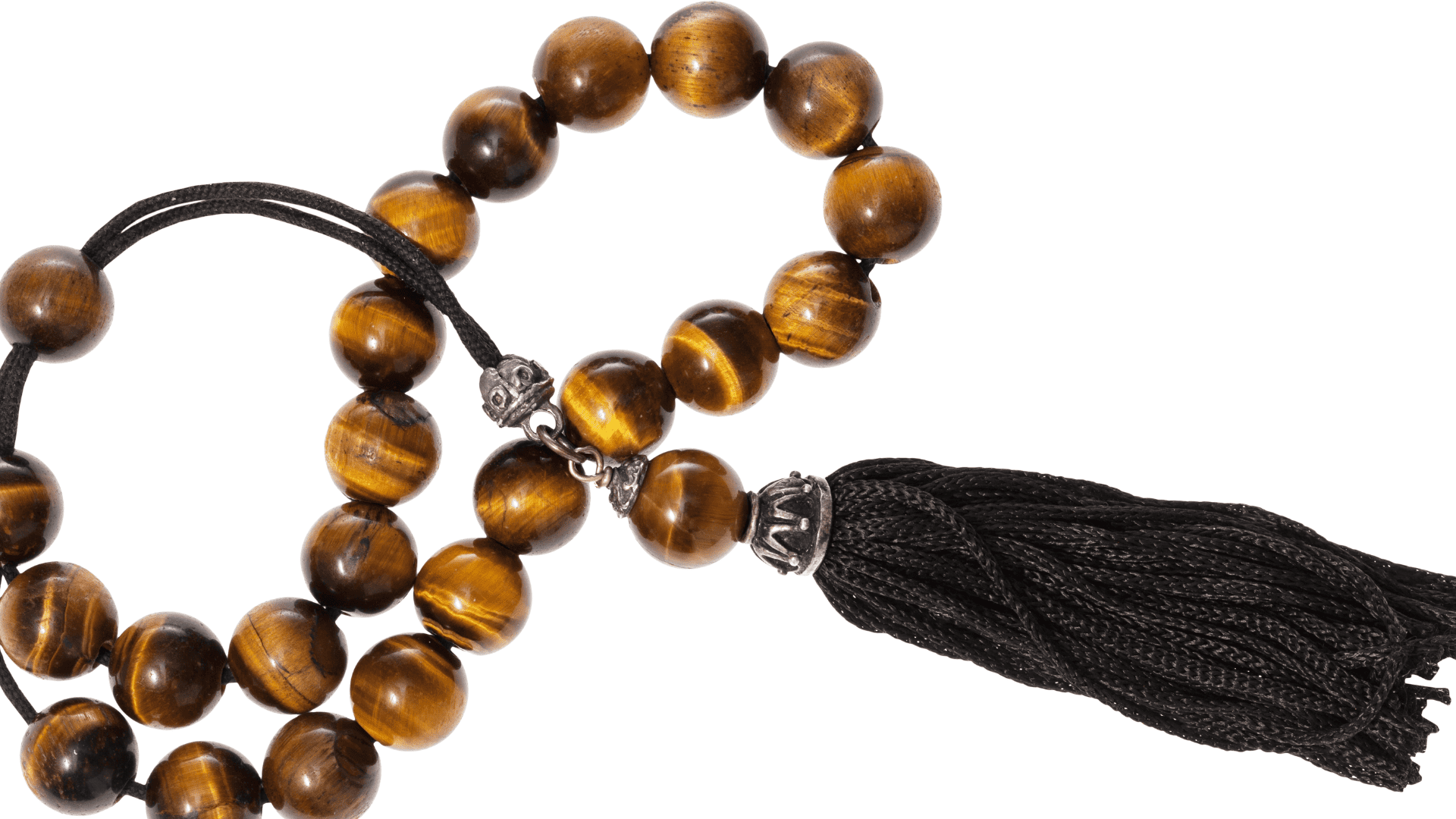
Sit at a traditional kafeneio in Greece and you may notice a familiar movement: beads passing slowly through someone’s fingers, one after another, sometimes quietly and sometimes with a distinctive clicking sound. This is the komboloi, commonly known as Greek worry beads.
For visitors, it may look like a simple accessory. For Greeks, however, the komboloi is connected with relaxation, habit, conversation, and a tradition that has become part of everyday life.
What Is a Komboloi?
A komboloi is a string of beads that can be moved rhythmically through the fingers. Unlike prayer beads, it has no religious purpose in modern Greek culture. Instead, people use it as a way to keep their hands occupied, relax, pass the time, or simply enjoy the repetitive movement and sound of the beads.
There is no single correct way to hold or use one. Some people slowly move each bead between their fingers, while others swing the string so that the beads click against one another.
The name itself is often associated with the Greek words kombos, meaning “knot,” and leo, meaning “I say,” reflecting its historical connection with strings of beads used for counting prayers.
From Prayer Beads to an Everyday Greek Tradition
The exact story of the komboloi is not completely clear, but its development is generally linked to older traditions of prayer beads used across different religions and cultures.
Over time, the Greek komboloi took on a character of its own. Its religious function disappeared, and the beads became associated instead with leisure and everyday life.
By the 20th century, the komboloi had become a familiar sight in Greek cafés and social gatherings, particularly among men. It was something to hold while drinking coffee, talking with friends, thinking, or simply watching the world go by.
Beads With Their Own Character
Komboloi can be made from many different materials, from wood, glass, and stone to more valuable materials such as amber.
The choice of material changes the weight, texture, and even the sound the beads make as they move. For people who collect them, these details can be part of their appeal.
Older or handcrafted komboloi can also be valued as collectible objects, with individual pieces reflecting different materials, techniques, and periods of Greek craftsmanship.
The Komboloi in Cretan Life
In Crete, as elsewhere in Greece, the komboloi fits naturally into the slower rhythms of traditional social life. You may still spot one in the hands of someone sitting outside a village kafeneio, enjoying a Greek coffee and conversation.
It is one of those small details that can easily go unnoticed while travelling, yet it says something about the culture around it. The komboloi is not a grand monument or an elaborate tradition. It belongs to ordinary moments.
A Small Object With a Greek Story
The komboloi has changed considerably from the prayer beads that influenced its early history. Today, it is a familiar symbol of Greek everyday culture: simple, personal, and instantly recognizable.
So, the next time you hear the quiet click of beads at a café or in a village square, look a little closer. What seems like a simple string of beads carries with it a story of tradition, relaxation, and a distinctly Greek way of passing the time.